
Open-mouth posture and mouth breathing are extremely common—and often overlooked—in both children and adults. As a myofunctional therapist and speech-language pathologist serving Bethesda and the greater DMV area, as well as telepractice clients in Florida and California, I work closely with families who are concerned about breathing patterns, speech development, and oral habits.
If you’ve noticed your child breathing with their mouth open, snoring at night, struggling with certain sounds, or developing oral habits, myofunctional therapy may be an important step in supporting healthier growth.
What Is Open-Mouth Posture?
Open-mouth posture occurs when the lips stay apart at rest and the tongue sits low in the mouth instead of resting on the palate.
A healthy oral resting posture includes:
Lips gently closed
Tongue resting fully on the palate
Nasal breathing (day and night)
Teeth slightly apart
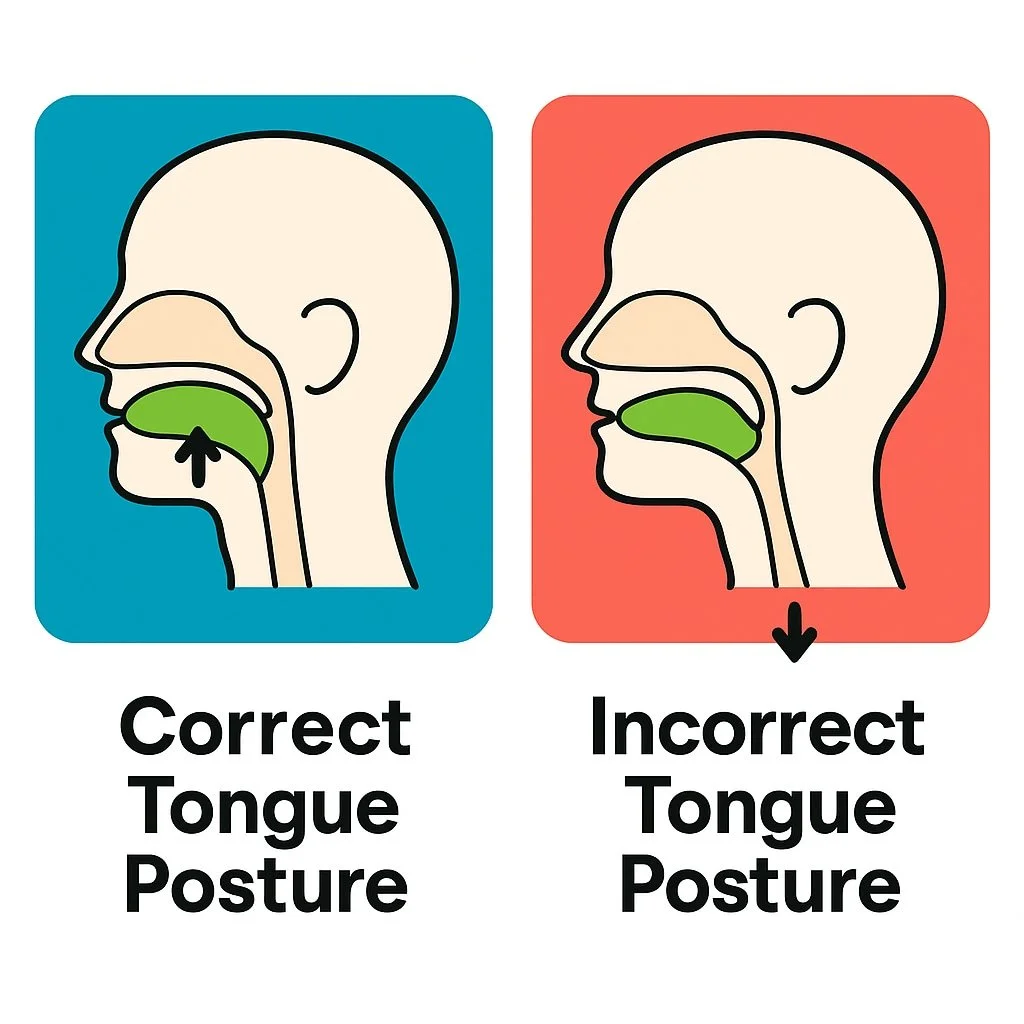
correct versus incorrect tongue posture
Why Open-Mouth Posture Happens
• Nasal congestion or allergies
• Enlarged tonsils or adenoids
• Low tongue tone or weak oral muscles
• Thumb sucking or prolonged pacifier use
• Structural differences
How Open-Mouth Posture Affects Children and Adults
Open-mouth posture can influence speech development, daytime fatigue, dental alignment, oral-motor control, sleep quality, and swallowing patterns.
How Myofunctional Therapy Helps
• Correct tongue posture
• Nasal breathing support
• Lip closure at rest and while sleeping
• Swallow pattern correction
• Habit elimination
Signs Your Child May Benefit
• Lips apart at rest or while sleeping
• Snoring
• Mouth breathing
• Messy eating
• Congestion
• Speech errors
• Chapped lips
• High palate
Schedule an Evaluation Today
Learn more or book your session:
Myofunctional Therapy Speech Therapy About ME Contact / Schedule
Myofunctional therapy is available in-person in the Bethesda/DMV area and via telepractice for families in multiple states, including Massachusetts.
